

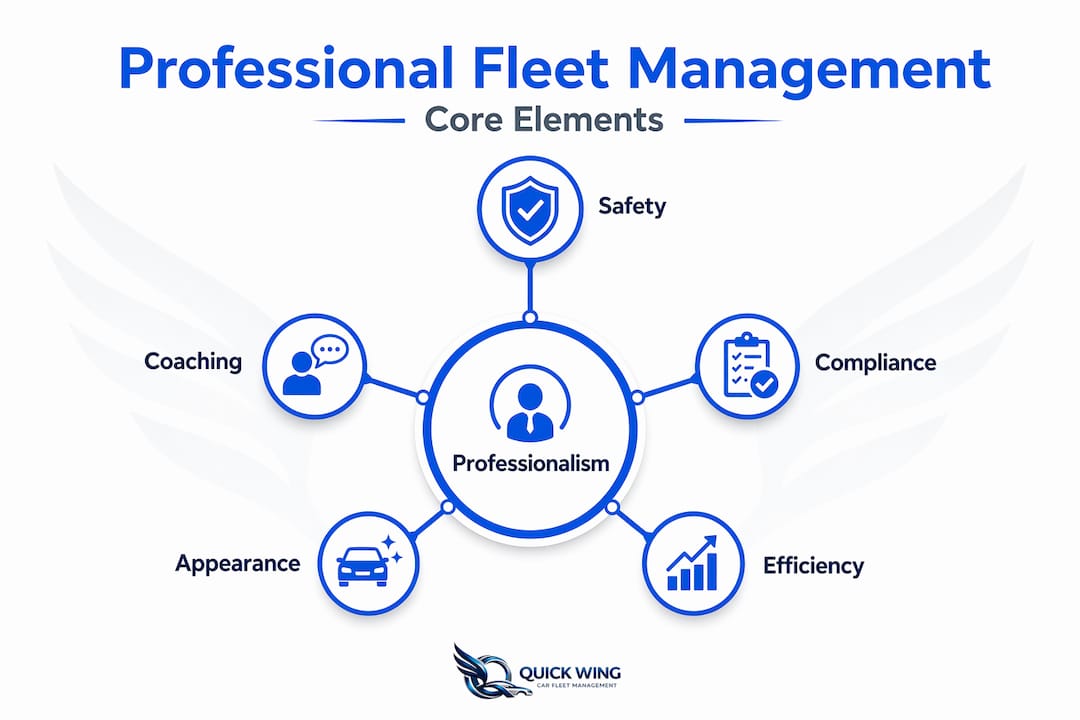
Most people assume fleet management is about knowing where your vehicles are. It is not. The real reason why fleet management improves professionalism is what happens before, during, and after every trip: controlled costs, reliable scheduling, documented compliance, and drivers who perform consistently. Fuel consumption alone drops 10 to 30% when routes are managed properly, which means accurate ETAs, fewer frustrated customers, and a reputation your competitors cannot fake. This article breaks down exactly how fleet management creates that professional edge across operations, safety, and client experience.
Table of Contents
- Understanding fleet management and its professionalism impact
- Fuel efficiency and route optimization: professionalism through performance
- Compliance and regulatory adherence as professionalism cornerstones
- Cultivating a safety culture through leadership engagement
- Leveraging telematics and driver coaching for proactive professionalism
- Professional fleet appearance and organization: the role of commercial upfits
- Why professionalism starts before the vehicle moves: a leader's view
- Enhance your fleet professionalism with Quick Wing software
- Frequently asked questions
Key Takeaways
| Point | Details |
|---|---|
| Fleet management scope | Fleet management oversees vehicles, drivers, maintenance, compliance, and operational efficiency to enhance professionalism. |
| Fuel savings benefits | Route optimization and idling monitoring reduce fuel use by up to 30%, improving reliability and customer trust. |
| Compliance importance | Following FMCSA regulations with thorough inspections and recordkeeping maintains a professional image and avoids penalties. |
| Safety culture impact | Leadership engagement fosters a safety-driven culture that makes employees feel valued and enhances fleet professionalism. |
| Technology for coaching | Using telematics for real-time driver coaching reduces incidents significantly, shifting fleet professionalism from reactive to proactive. |
Understanding fleet management and its professionalism impact
Fleet management is not a single tool. It is a discipline covering vehicles, drivers, maintenance schedules, regulatory compliance, and day-to-day operational efficiency. When you bring all of that under one system, you stop reacting to problems and start preventing them.
Fleet management includes overseeing vehicles, drivers, maintenance, compliance, and operational efficiency to minimize costs and risks. That scope matters because professionalism is not built from any one thing. It is built from reliability repeated consistently across every part of your operation.
The benefits of fleet management show up in specific ways that clients and regulators actually notice:
- Vehicles are available when needed, not held up by surprise repairs
- Drivers follow structured routes, reducing late arrivals and missed appointments
- Compliance records are current, so there are no scrambles before an audit
- Costs are tracked at the vehicle level, so margin leaks get caught early
- Real-time data replaces guesswork, giving managers actual visibility instead of assumptions
Modern fleet management integrates telematics (GPS tracking combined with vehicle performance data) with scheduling, compliance alerts, and driver monitoring. Explore the fleet management features that bring all of this together in one place. The result is an operation that feels organized because it actually is organized, which is exactly what professionalism in fleet operations looks like from the outside.
Fuel efficiency and route optimization: professionalism through performance
Fuel is typically the second largest operating expense a fleet carries, sitting just behind labor. That makes it a highly visible number and an easy place for costs to spiral when routes are unmanaged and idle time goes unchecked.
Route optimization does more than save money. It creates predictability. When drivers follow planned routes, you can give customers a realistic arrival window and actually meet it. That single improvement changes how clients perceive your business. Fleet management reduces fuel consumption by 10 to 30% through route optimization and idling monitoring, enabling accurate ETAs that customers notice immediately.
What this looks like in practice:
- A home care company with 12 vehicles cuts idle time by monitoring engine-on periods between visits
- A delivery team reduces daily mileage by 18% simply by sequencing stops in order of proximity
- A service business eliminates "windshield time" overlap by assigning vehicles to geographic zones
Stat to know: Fuel savings from route optimization can translate directly into capacity. If your fleet spends less time driving unnecessarily, it can complete more jobs in the same hours, without adding a single vehicle.
Using route optimization software removes the human errors that come from dispatchers manually building schedules in spreadsheets. Drivers get clear instructions, managers get accurate data, and customers get a business that shows up when it says it will. That is how fleet management improves service, one completed commitment at a time.
Compliance and regulatory adherence as professionalism cornerstones
If professionalism had a floor, compliance would be it. You cannot present as professional while running vehicles with expired inspections, lapsed licenses, or missing maintenance records. Clients may not ask to see your files, but insurers and regulators will. And when something goes wrong on the road, documentation is what protects your business.
FMCSA 49 CFR 396.3 requires systematic vehicle inspection, repair, and maintenance with records retention to project operational professionalism. In plain terms, that means you need a paper trail for every maintenance action, and it needs to be retrievable. Fleet management software makes that automatic rather than aspirational.
Here is how a compliance-focused fleet builds professionalism step by step:
- Schedule inspections proactively, based on mileage or calendar intervals, not when a driver notices something
- Log every repair with date, technician, cost, and outcome in one accessible system
- Set automated alerts for upcoming license renewals, insurance deadlines, and service milestones
- Retain records by vehicle, so you can pull the history for any unit in under a minute
- Audit your own records quarterly before any external review forces you to
Reviewing fleet compliance management pricing is worth doing early. The cost of a system that keeps you compliant is a fraction of what a missed inspection or regulatory violation can cost in fines, downtime, or lost contracts.
Pro Tip: Build your compliance calendar around your busiest operational periods. Scheduling a vehicle for inspection during your highest-demand season creates avoidable gaps. Plan ahead by at least 60 days and you will rarely face a forced choice between compliance and capacity.
For broader guidance on staying ahead of regulatory changes, transport compliance strategies offer a useful external reference point for how leading organizations approach this systematically.
Cultivating a safety culture through leadership engagement
Rules tell people what to do. Culture tells them why it matters. That distinction is what separates a fleet that follows safety procedures from one that genuinely values them.
Leadership engagement is the difference. When executives and managers visibly participate in safety programs, not just sign off on them, employees notice. They stop treating safety as a box-ticking exercise and start treating it as a shared standard. Forty-nine percent of fleet professionals prioritize employees feeling valued in safety culture, and fleet management creates the systems that make that feeling real.
What a strong safety culture actually looks like in a fleet:
- Leaders attend safety briefings rather than delegating them entirely to supervisors
- Drivers are recognized for clean records, not only corrected when something goes wrong
- Near-miss reports are encouraged, not punished, so real risks get surfaced before they become accidents
- Safety metrics are reviewed in leadership meetings, making them a business priority, not an HR formality
- Fleet management data is shared with drivers so they understand how their behavior connects to outcomes
"Leadership engagement in fleet safety separates fleets that adapt from those that keep addressing the same compliance challenges year after year."
Connecting drivers to contact fleet management experts who understand both the technical and cultural sides of this challenge can accelerate that shift. Reviewing what fleet safety culture looks like in well-run operations also gives fleet managers a concrete benchmark to work toward.
Leveraging telematics and driver coaching for proactive professionalism
Reactive management is expensive. You find out a driver is speeding after an incident. You discover a vehicle is idling excessively after reviewing a fuel bill. You learn about unsafe lane changes after a complaint. Telematics changes the timing. You get the information before the problem compounds.
Modern fleet telematics systems continuously monitor driver risk metrics including harsh braking, rapid acceleration, speeding, and distracted driving patterns. AI-driven platforms then flag these behaviors in real time, allowing managers or automated systems to deliver coaching while the context is still fresh. Consistent driver coaching based on telematics data reduces incidents by 20 to 35% within 90 days, shifting the entire operation from reactive to proactive.
Here is how to build an effective telematics-driven coaching program:
- Establish baseline metrics for every driver before coaching begins, so improvement is measurable
- Define clear thresholds for behaviors that trigger a coaching conversation, consistently applied to everyone
- Deliver feedback within 24 hours of the event, while the driver can still recall the situation clearly
- Focus on patterns, not isolated incidents, so drivers do not feel unfairly targeted
- Track progress monthly and recognize measurable improvement publicly
Pro Tip: Drivers accept data-based feedback much better when they can see their own metrics on demand. Giving drivers access to their own telematics driver coaching features dashboard transforms coaching from a management tool into a self-improvement resource.
| Coaching approach | Incident reduction | Time to results | Driver acceptance |
|---|---|---|---|
| No formal coaching | Minimal | N/A | N/A |
| Manual observation only | 5 to 10% | 6 to 12 months | Low |
| Telematics with periodic review | 15 to 20% | 3 to 6 months | Moderate |
| Real-time telematics with coaching | 20 to 35% | 30 to 90 days | High |
The insurance implications alone justify the investment. Fleets that demonstrate documented coaching programs often negotiate better premiums because insurers respond to evidence of proactive risk management.
Professional fleet appearance and organization: the role of commercial upfits
A client sees your vehicle before they see your work. That moment forms an impression that your service quality then either confirms or contradicts. A disorganized van with tools sliding around the cargo area and no visible system signals the opposite of competence.
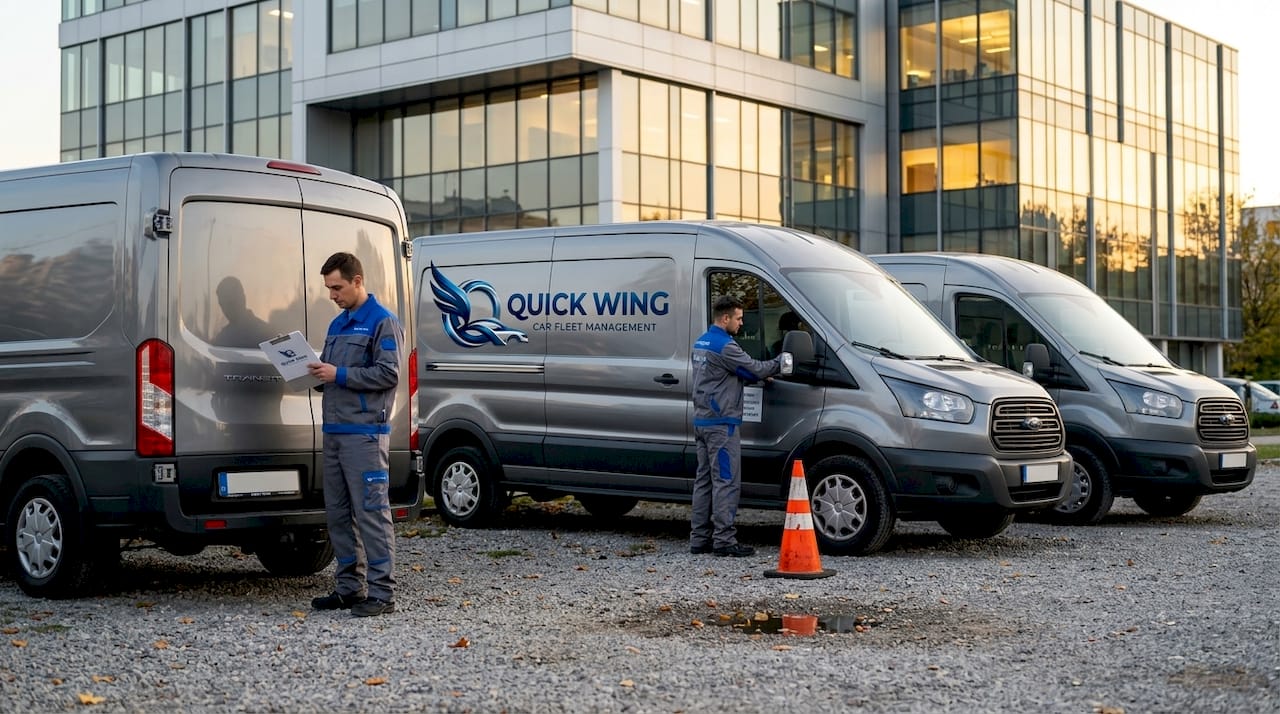
Commercial upfits are custom interior modifications that convert a standard commercial vehicle into a purpose-built workspace. Shelving units, tool drawers, ladder racks, and safety partitions are common examples. The impact goes well beyond aesthetics.
Organized vehicles via commercial upfits send immediate professionalism signals and improve safety and productivity. Specific benefits include:
- Custom storage eliminates tool loss, which is a surprisingly significant time and cost drain for service teams
- Safety partitions and anchor points reduce driver injury risk when cargo shifts during transit
- Branded, clean vehicles function as rolling marketing for your business in every neighborhood you serve
- Organized workspaces let technicians work faster because they are not searching for equipment at every job site
- Well-maintained upfits preserve resale value, meaning the investment pays dividends when you cycle the vehicle out
Stat to know: Service businesses that wrap and organize their vehicles consistently report higher inbound inquiries simply from vehicles being seen parked at job sites. The vehicle itself becomes a marketing asset.
Pro Tip: Standardize your upfit configuration across all vehicles of the same type. When any driver can find any tool in the same spot regardless of which vehicle they use that day, your operational speed and consistency both improve.
Reviewing fleet organization solutions pricing alongside your vehicle refresh cycle is the smartest time to make this investment, since coordinating upfits with new vehicle acquisition reduces total project cost significantly.
Why professionalism starts before the vehicle moves: a leader's view
Here is the honest take after working through all of these elements: professionalism is not a behavior you train into drivers. It is an organizational environment you build, and then drivers either rise to or fall below its standard.
Most fleet management conversations focus on tracking and compliance because those are measurable. But the impact of fleet management on professionalism runs deeper. It runs through whether your leadership shows up to safety meetings. It runs through whether your vehicles look like someone cares about them. It runs through whether your drivers get coaching that feels fair or surveillance that feels punitive.
Leadership engagement in fleet safety separates fleets that keep improving from those that cycle through the same problems with different drivers. The technology does not change that. A telematics system installed in a culture of mistrust produces resentment, not results.
The same logic applies to organized vehicles via fleet upfits. A tidy, well-equipped vehicle does not just send a signal to clients. It sends a signal to the driver. It says: this company takes its work seriously, and so should you. That is why fleet management matters beyond the operational metrics.
Fleet management best practices are not a checklist. They are a culture. The data, the compliance records, the route optimization, and the vehicle appearance all reinforce a single message to clients, regulators, and employees alike: this is a business that has its act together. That reputation is built before the vehicle ever pulls out of the lot. Explore the fleet management industry perspective that shapes how modern fleets approach this.
Enhance your fleet professionalism with Quick Wing software
Building a professional fleet operation requires more than good intentions. It requires visibility, and that is exactly what Quick Wing delivers. If you manage shared vehicles across a team and you are still relying on spreadsheets, group chats, or someone's memory to track bookings and compliance, the system is already working against you.
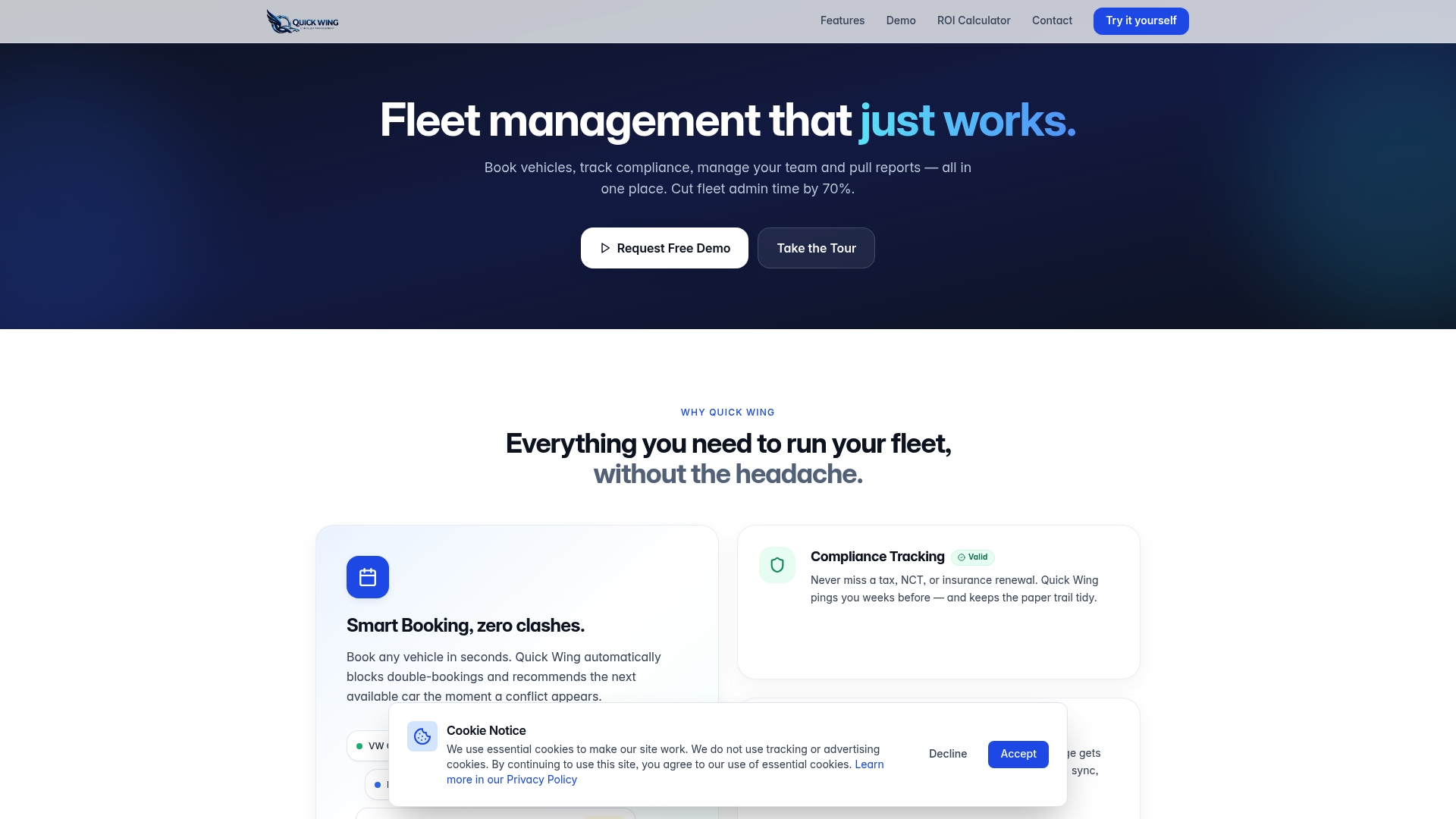
Quick Wing gives fleet managers a single place to see which vehicles are booked, who is using them, when they are available, and whether compliance items are current. No chasing people for updates. No discovering a vehicle is double-booked at 7 a.m. It is built from real operational experience, which means it solves the problems that actually slow businesses down, not theoretical ones. Review the full Quick Wing fleet management features and Quick Wing pricing options to find the setup that fits your fleet size and budget.
Frequently asked questions
How does fleet management improve customer perceptions of professionalism?
Fleet management improves customer perceptions by enabling accurate ETAs through route optimization and reducing delays, signaling reliability. Fuel consumption drops 10 to 30% through managed routing, which directly translates to on-time arrivals customers notice.
What role does regulatory compliance play in fleet professionalism?
Compliance ensures vehicles are safe and well-maintained, which builds trust with clients and regulators. FMCSA 49 CFR 396.3 requires inspection and maintenance records that demonstrate an organized, accountable operation to anyone who reviews them.
How can telematics help reduce fleet accidents?
Telematics continuously monitors driver behavior, enabling timely coaching that addresses risk patterns early. Consistent coaching reduces incidents by 20 to 35% within 90 days, improving both safety outcomes and overall professionalism.
Why is leadership engagement essential in fleet safety culture?
Visible leadership commitment builds a culture where employees feel valued and prioritize safety rather than just following rules. Forty-nine percent of fleet professionals cite employees feeling valued as a top safety culture priority, and that starts with leadership behavior.
What benefits do commercial upfits provide for fleet professionalism?
Commercial upfits improve vehicle organization and safety while projecting a professional image that builds client trust before any work begins. Organized vehicles send immediate professionalism signals and also improve driver efficiency and reduce injury risk during transit.