

Managing a fleet without the right tools is like navigating without a map. You might eventually get where you're going, but you'll waste fuel, miss turns, and arrive late. For fleet managers and business owners in service industries, the daily grind of juggling vehicle availability, compliance deadlines, driver schedules, and rising operational costs creates real pressure. Fleet tracking software cuts through that noise by centralizing everything that matters into one system. This article walks you through the evaluation criteria, core benefits, and financial impact so you can make a confident decision.
Table of Contents
- What to look for in fleet tracking software
- Improved operational efficiency
- Enhanced compliance and safety
- Cost savings and ROI: A comparative overview
- Better decision-making through data analytics
- A fleet manager's take: Why software is no longer optional
- Ready to transform your fleet? Next steps
- Frequently asked questions
Key Takeaways
| Point | Details |
|---|---|
| Simplifies compliance | Automated logging and reporting help you stay compliant with minimal effort. |
| Boosts efficiency | Optimized routes and reduced downtime maximize fleet productivity every day. |
| Delivers cost savings | Lower fuel, maintenance, and insurance costs contribute to clear ROI. |
| Supports data-driven decisions | Actionable analytics highlight trends so you make smarter choices quickly. |
What to look for in fleet tracking software
Not all fleet tracking platforms are built the same. Before you commit to any solution, it pays to know exactly what separates a tool that genuinely helps from one that just adds another login to your morning routine.
The most effective platforms share a few non-negotiable qualities. First, they give you real-time visibility into every vehicle in your fleet, not just a snapshot from an hour ago. Second, they automate the compliance tasks that currently eat your time, like maintenance reminders, license renewals, and driver hour logs. Third, they surface actionable data rather than raw numbers that require a data analyst to interpret. As the key software features at Quick Wing demonstrate, fleet tracking solutions must enhance efficiency and compliance while offering actionable insights for managers.
Here's a practical checklist to guide your evaluation:
- Real-time vehicle tracking with location and status updates
- Automated compliance alerts for maintenance, licenses, and inspections
- Booking and availability management so staff know which vehicles are free
- Customizable reporting dashboards that match your reporting needs
- Scalable user access so the platform grows with your team
- Mobile-friendly interface for managers and drivers on the go
- Integration capability with your existing scheduling or HR tools
Pro Tip: Prioritize platforms that allow you to customize compliance categories. Every industry has slightly different legal obligations, and a rigid system that doesn't adapt to your specific requirements will create gaps rather than close them.
Scalability is often overlooked during the buying decision. A small fleet today can become a large one within two years, especially in growing service businesses. Choosing a platform that charges per vehicle and offers tiered features means you won't be forced into a painful migration later.
Improved operational efficiency
With an understanding of what to look for, let's explore how these features deliver tangible efficiency gains every day.
Operational efficiency in fleet management comes down to one question: are your vehicles being used as productively as possible? The answer, for most businesses without tracking software, is no. Vehicles sit idle, routes overlap, and scheduling conflicts create a domino effect of delays and frustrated customers.
Fleet tracking software attacks these problems directly. Advanced tracking allows businesses to reduce idle time and avoid inefficient routes, resulting in improved delivery times. When managers can see exactly where every vehicle is and how long it has been stationary, they can reassign resources in real time rather than waiting for a driver to call in.
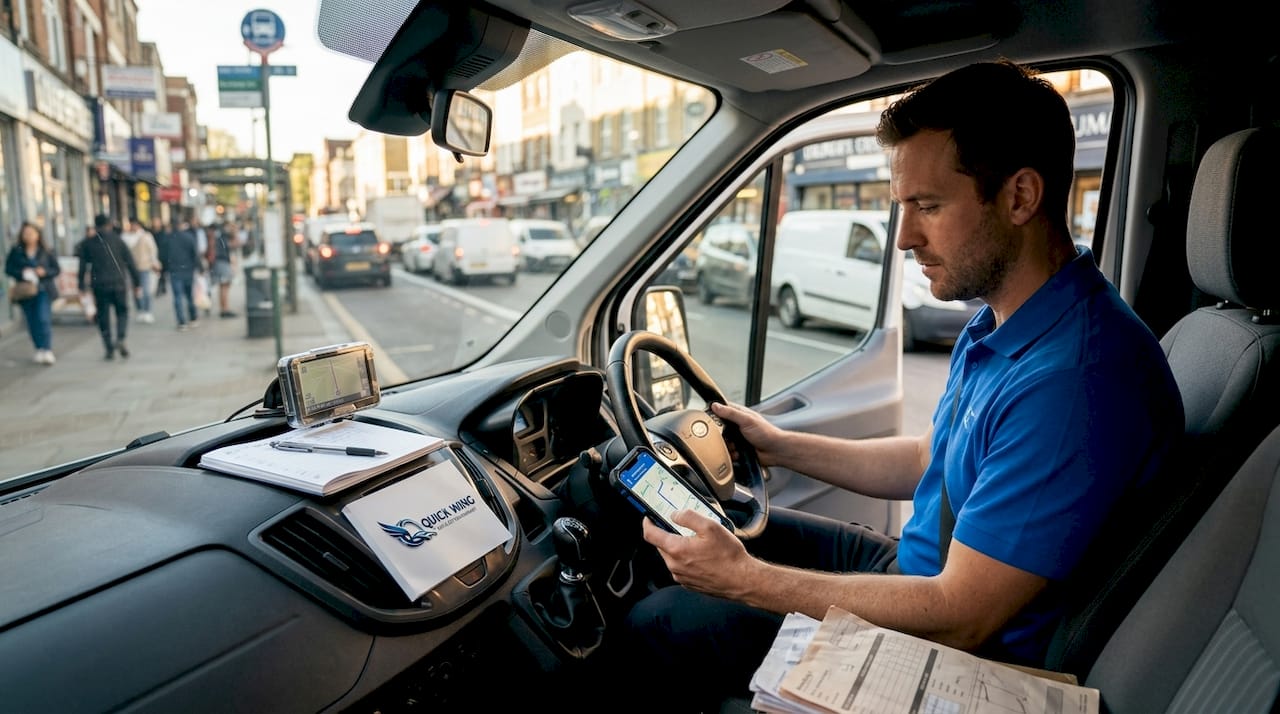
Consider a home care provider with 15 vehicles serving clients across a city. Without tracking software, schedulers rely on phone calls and rough estimates to assign vehicles. With tracking software, they see a live map, spot a vehicle finishing a job nearby, and reassign it instantly. That single change can reduce travel time per shift by 20 to 30 minutes across an entire fleet.
The efficiency gains extend beyond routing:
- Scheduling transparency means no double-bookings or vehicles sitting unused while staff wait
- Automated vehicle availability updates eliminate the back-and-forth WhatsApp messages that slow every team down
- Maintenance scheduling prevents unexpected breakdowns that take vehicles off the road at the worst possible time
- Driver accountability improves when staff know their routes and times are being tracked
Pro Tip: Use automated alerts tied to route optimization strategies to notify managers when a vehicle has been idle for more than 30 minutes during a shift. This single alert can recover dozens of productive hours per week across a mid-sized fleet.
The compounding effect of these small improvements is significant. A fleet that saves 20 minutes per vehicle per day across 20 vehicles recovers nearly 7 hours of productive capacity daily. That's the equivalent of adding a part-time employee without any additional payroll cost.
Enhanced compliance and safety
Efficiency is only part of the story. The right software also strengthens compliance and safety, which are vital for every manager.
Compliance failures are expensive. A missed vehicle inspection, an expired driver license, or an undocumented maintenance issue can result in fines, insurance complications, or worse, a serious accident. Fleet management platforms help track driver hours and vehicle maintenance schedules to ensure compliance is maintained without relying on memory or manual spreadsheets.
Here's how a well-implemented tracking system supports compliance step by step:
- Automated maintenance reminders trigger alerts before a service is due, not after it's overdue
- Driver license and certification tracking flags expiry dates weeks in advance so you have time to act
- Digital vehicle inspection logs create an auditable record that satisfies regulatory requirements
- Driver hour monitoring ensures no one exceeds legal driving limits, reducing fatigue-related risk
- Incident documentation captures time-stamped data that supports insurance claims and internal reviews
"The real value of automated compliance reporting isn't just avoiding fines. It's the confidence that comes from knowing your entire fleet is operating within legal and safety boundaries at all times, without needing to manually check every record every week."
Safety and compliance are deeply connected. When drivers know that their hours, routes, and vehicle conditions are being monitored, behavior improves. Speeding incidents decrease. Pre-trip inspections get completed. Small maintenance issues get reported before they become major failures. The compliance-related tools built into modern platforms make this cultural shift easier to sustain because the system enforces the standard, not just the manager.
For businesses in regulated industries like home care, medical transport, or hazardous goods delivery, this level of automated oversight isn't optional. It's the difference between operating legally and facing serious liability.
Cost savings and ROI: A comparative overview
Beyond safety and compliance, the financial advantages deserve a clear, side-by-side look.
Businesses can expect substantial cost reductions in fuel, maintenance, and insurance through automated tracking. These savings come from multiple directions simultaneously, which is why the ROI for fleet tracking software tends to be faster than most managers expect.
| Cost category | Before tracking software | After tracking software |
|---|---|---|
| Fuel spend | High due to inefficient routing | Reduced by 10 to 20% through optimized routes |
| Maintenance costs | Reactive, often expensive repairs | Proactive scheduling reduces emergency repairs |
| Insurance premiums | Based on general risk profile | Lower premiums with documented safety records |
| Administrative labor | Manual logs, spreadsheets, phone calls | Automated reporting saves 5 to 10 hours per week |
| Vehicle downtime | Unplanned, disrupts operations | Minimized through predictive maintenance alerts |
| Accident-related costs | Higher frequency, limited documentation | Reduced incidents and stronger evidence trail |
The numbers tell a clear story. Most service businesses with fleets of 10 or more vehicles see a return on their software investment within 6 to 12 months. The payback accelerates as the fleet grows because the efficiency and compliance gains scale proportionally while the software cost often does not.
Beyond direct savings, there's a less obvious financial benefit: vehicle lifespan. Vehicles that receive timely maintenance, avoid excessive idling, and aren't driven aggressively last significantly longer. Extending the useful life of a vehicle by even one year across a fleet of 15 vehicles can represent tens of thousands of dollars in deferred capital expenditure. Explore fleet cost reduction insights to understand how these numbers apply to businesses of different sizes.
The insurance angle is also worth highlighting. Insurers increasingly reward documented safety practices. A fleet with clean maintenance records, driver hour compliance, and incident documentation can negotiate meaningfully better premiums than one relying on verbal assurances and paper logs.
Better decision-making through data analytics
All these benefits build to one of the most transformative changes: the ability for managers to act confidently using data.
Most fleet managers today make decisions based on incomplete information. They know roughly how many vehicles they have, roughly how they're being used, and roughly what things cost. "Roughly" is expensive. Access to real-time analytics enables managers to identify trends and make data-driven fleet decisions that replace guesswork with precision.
Modern fleet tracking platforms surface analytics that directly support operational and strategic decisions:
- Vehicle utilization rates reveal which assets are overworked and which are underused
- Route performance data identifies consistently slow or inefficient corridors that need adjustment
- Driver performance metrics highlight training opportunities and reward high performers
- Maintenance cost trends show which vehicles are becoming financially unviable
- Booking pattern analysis helps managers anticipate demand and allocate resources proactively
The ability to spot an underperforming route or an aging vehicle before it becomes a crisis is genuinely valuable. Without data, these issues surface as complaints, breakdowns, or budget overruns. With data, they show up as a trend line weeks earlier, giving managers time to respond.
Pro Tip: Use customizable dashboards within your software analytics capabilities to create board-ready reports that translate raw fleet data into business outcomes. Executives respond to cost per delivery, on-time performance rates, and compliance scores, not raw GPS coordinates. Build your reporting view around those metrics from day one.
The strategic value of analytics compounds over time. After 12 months of data, you can identify seasonal patterns, benchmark performance across vehicles and drivers, and build a business case for fleet expansion or contraction based on evidence rather than instinct. That's a fundamentally different way of running a fleet, and it's only possible with the right software in place.
A fleet manager's take: Why software is no longer optional
There's a version of this conversation that happened five years ago where fleet tracking software was described as a competitive advantage. That framing is now outdated. Today, it's closer to a basic operational requirement, like having a phone system or a payroll tool.
The businesses still managing fleets through spreadsheets, group chats, and handwritten logs aren't saving money by avoiding software. They're spending it in ways that don't show up on a single line item. They're spending it in the extra hour a manager burns every morning reconciling vehicle bookings. They're spending it in the compliance fine that arrives because a maintenance check slipped through the cracks. They're spending it in the customer relationship that ends because a vehicle wasn't available when it was promised.
What we've seen consistently is that hesitation around technology adoption usually comes from one of two places: cost concern or change resistance. Both are understandable. But the cost concern dissolves quickly once you map actual software pricing against the real cost of manual administration, reactive maintenance, and compliance risk. And change resistance, while real, tends to fade fast once staff experience a system that actually makes their day easier rather than harder.
The shift from manual oversight to automated intelligence isn't just about efficiency. It changes the nature of the manager's role. Instead of chasing information, you receive it. Instead of reacting to problems, you anticipate them. That's not a small upgrade. It's a fundamentally different way of operating, and the businesses that make the shift earlier build a structural advantage that's genuinely hard for slower competitors to close.
The uncomfortable truth is that every month spent without proper fleet tracking software is a month of unnecessary cost, risk, and friction. The tools exist. The ROI is documented. The only remaining question is timing.
Ready to transform your fleet? Next steps
If the benefits covered in this article reflect challenges you're already dealing with, the next step is straightforward.
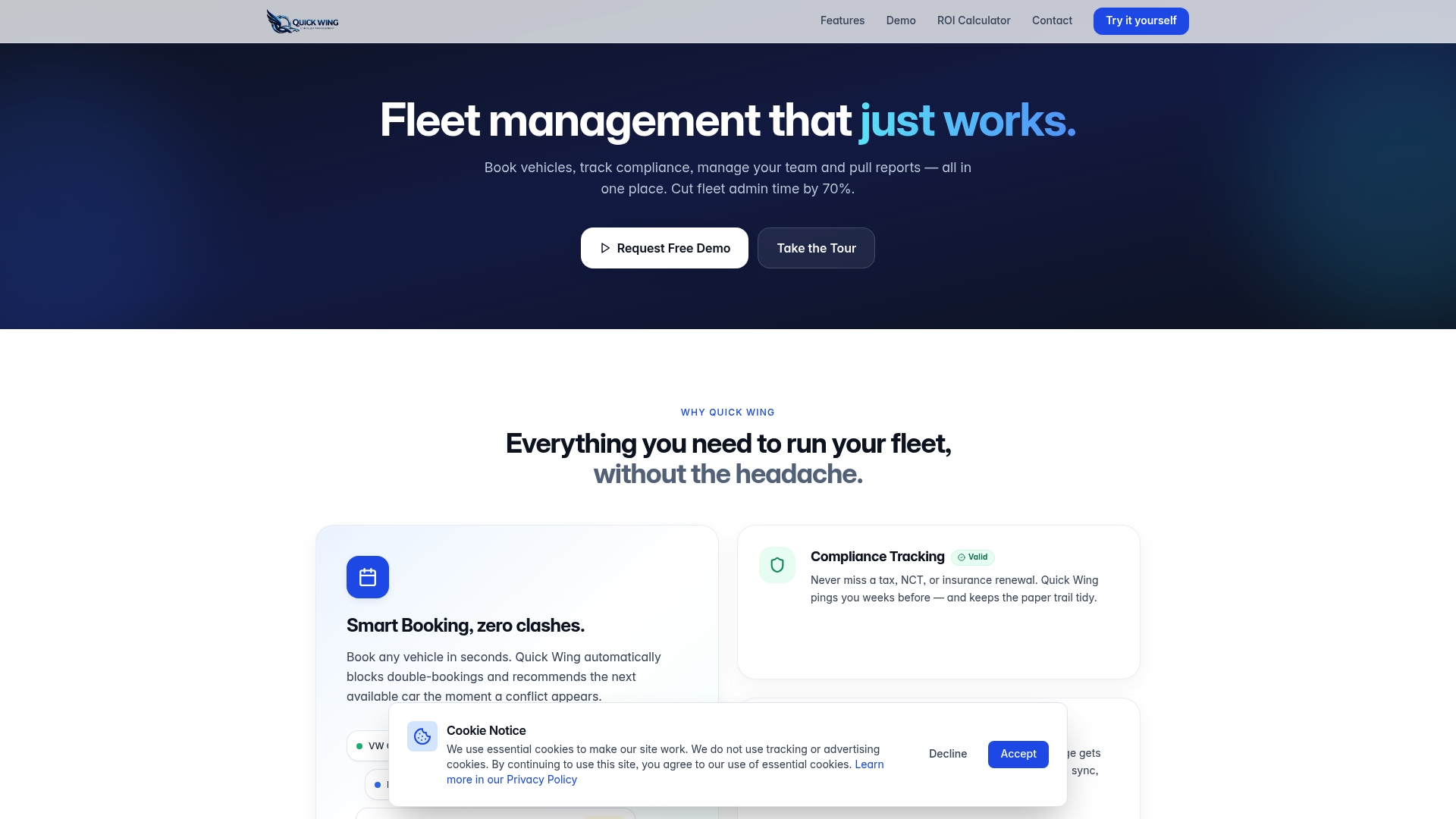
Quick Wing is built specifically for businesses that manage shared vehicles every day and need a clear, professional way to stay on top of bookings, compliance, and availability. It was designed from real operational experience, which means it solves the problems that actually slow teams down rather than adding complexity for its own sake. Review the Quick Wing fleet features to see exactly how the platform addresses efficiency, compliance, and cost control. When you're ready to compare options, Quick Wing pricing is structured to fit businesses at different stages of growth. If you'd like to understand how Quick Wing fits your specific operation, learn more about Quick Wing and reach out for a conversation tailored to your fleet size and industry.
Frequently asked questions
How does fleet tracking software reduce operational costs?
Fleet tracking minimizes fuel, maintenance, and insurance costs by automating route and performance management, and businesses can expect substantial cost reductions across all three categories through consistent automated tracking.
Is fleet tracking software difficult to implement?
Leading platforms offer fast onboarding, intuitive interfaces, and scalable integration, making adoption straightforward. Solutions built to enhance efficiency and compliance are designed with operational teams in mind, not just IT departments.
Does tracking software help with legal compliance?
Yes. By automating driver hour logs and maintenance schedules, fleet tracking software ensures compliance is maintained, and platforms that track driver hours and vehicle service records create an auditable trail that satisfies most regulatory requirements.
Can fleet tracking software improve driver accountability?
Absolute visibility helps managers coach drivers, reduce risky behavior, and reward performance with accurate data. Real-time analytics make it possible to identify patterns in driver behavior and act on them before they become safety or compliance issues.